
Introduction
John Dryden’s Mac Flecknoe (1682) stands as one of the most influential verse satires in English literature. As a landmark mock-heroic poem, it combines scathing wit, artful irony, and masterful poetic technique to attack both a personal rival—Thomas Shadwell—and, more broadly, the prevailing decline Dryden perceived in Restoration literary taste. The poem is celebrated for elevating mockery to epic proportions: employing the grandiose style and conventions of classical epic poetry to lampoon the mediocrity of its target in brilliantly polished heroic couplets.
Beyond its stylistic merits, Mac Flecknoe is a potent critique of literary decay and a unique insight into the Restoration’s vibrant yet combative literary milieu. Dryden uses allusions, biblical and classical references, and a gallery of literary devices to reinforce his argument against not only Shadwell, but all writers and trends that he believed undermined literary standards. Additionally, the historic rivalry between Dryden (a Tory and the era’s magnate of court poetry) and Shadwell (a Whig, promoter of Jonsonian “humours” comedy, and later Dryden’s successor as Poet Laureate) confers to the poem a layered significance, both as a personal lampoon and as representative of ideological, aesthetic, and social tensions of the age.
This research seeks to analyze Mac Flecknoe comprehensively: its historical and literary context, publication history, detailed line-by-line commentary, exhaustive catalogues of allusions and figures of speech, and its place in the satirical tradition. The aim is not only to elucidate Dryden’s craftsmanship, but to understand how the poem functions as a sustained, dazzling display of literary satire and mock-heroic technique.
Background
Poem Overview and Main Themes
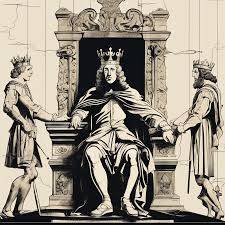
At its surface, Mac Flecknoe chronicles the succession of Richard Flecknoe, symbolically the reigning monarch of literary nonsense, as he seeks a worthy heir to his “kingdom” of stupidity. Flecknoe ultimately selects Thomas Shadwell—Dryden’s real-life rival—as the most worthy successor. The entire narrative is modeled on the archetypal hero’s journey but is subverted at every turn so that the usual epic conventions lie in stark and often comic contrast to the ridiculousness of the subject.
The main themes of the poem are:
- The Decline of Literary Standards: The ‘coronation’ of Shadwell represents the collapse of wit and intelligence in literature, as the worst qualities are ironically praised and presented as virtues.
- Inversion of Aesthetic Values: Dryden’s epic parody questions what society values as literary merit.
- Literary Succession and Legitimacy: The motif of succession—Flecknoe abdicating in favor of Shadwell—mirrors political anxieties about inheritance and rule, also referencing England’s contemporary succession crises.
- Personal and Political Satire: Shadwell is lampooned not only for his literary shortcomings but as a representative of Whig politics and middle-class taste.
Historical and Literary Context
The Restoration (1660–1688) marked the return of Charles II to the English throne, reopening the public sphere to the theaters and the arts after Puritan suppression. This period is known for its exuberant dramatic culture, emphasis on wit, and fierce literary rivalries. Both poetry and drama played a central role in public debate, with writers frequently engaging in polemical exchanges—often extending beyond mere literary critique into political and personal attacks.
John Dryden, as England’s first official Poet Laureate and a highly influential critic, played a defining role in shaping Restoration poetics and values. He was a leading proponent of neoclassical principles—order, wit, decorum—yet lived amid a divided society: Tories vied with Whigs, and debates about succession, Catholic/Protestant rivalry, and the role of monarchy permeated literary works.
The rivalry between Dryden and Shadwell grew from these divisions. While Dryden favored heroic couplets, classical allusions, and satirical refinement in both his dramas and poetry, Shadwell was a champion of the coarse, topical, and “humour”-driven style inspired by Ben Jonson. Their fierce public controversy over dramatic form, taste, and even plagiarism became legendary and is directly reflected in Mac Flecknoe.
Publication History and Authorship
Mac Flecknoe was composed between 1678 and 1679, but circulated only in manuscript form among Dryden’s peers for several years—likely because of its biting personal attacks. The first unauthorized printed edition appeared in 1682, amid heightened literary-political conflicts after Shadwell published a personal attack against Dryden in The Medal of John Bayes.
Dryden did not immediately claim authorship of the poem, but by the time it appeared in his 1684 Miscellany Poems, Mac Flecknoe had become known as his definitive satirical work. Throughout subsequent editions, textual revisions by Dryden refined the poem’s structure and sharpened its invective.
John Dryden: Biographical Background
Born in 1631, John Dryden’s career bridged the Interregnum and Restoration, culminating in his recognition as Poet Laureate in 1668. Dryden’s work is both public—writing odes for kings and engaging in literary criticism—and private, cultivating feuds with peers like Sir Robert Howard, Elkanah Settle, and especially Thomas Shadwell. After the Glorious Revolution, Dryden, a convert to Catholicism, was removed as laureate and replaced by the very rival he lampooned in Mac Flecknoe, cementing the lasting legacy of their antagonism.
Thomas Shadwell as Satire Target
Thomas Shadwell, born circa 1642, rose to prominence through comedies like Epsom Wells and The Virtuoso. A proud adherent of Jonson’s “humours” style, Shadwell distinguished himself by focusing on contemporary types and urban life, diverging from Dryden’s classically inspired tragedies and comedies of wit. After the Revolution, his Whig sympathies earned him the laureateship, but his reputation forever suffered from Dryden’s ridicule, immortalizing him as the king of Dullness: “Shadwell alone my perfect image bears, / Mature in dullness from his tender years”.
Mock-Heroic Form and Satirical Technique
Dryden’s Mac Flecknoe is a defining work of the mock-heroic genre—using the trappings of epic poetry (invocation of fate, grand processions, coronations, prophecy) to elevate mock subjects and drive home satire. Through inflated diction and the strategic parody of Rome’s legends and biblical episodes, Dryden drives the point that the most ridiculous and worthless writer (Shadwell) is being absurdly crowned as a worthy heir.
Line-by-Line Explanation
This section offers a detailed sequential analysis, integrating selected couplets with commentary. The structure of Mac Flecknoe follows a loose epic arc: succession, coronation preparation, journey to the throne, public acclamation, the bestowal of regalia and prophetic charge to the new king, and the final transfer of “mantle” (literary authority or, in Dryden’s mockery, the inheritance of supreme dullness).
Lines 1–6: The Opening Invocation
“All human things are subject to decay,
And, when Fate summons, monarchs must obey:”
This Flecknoe found, who, like Augustus, young
Was call’d to empire, and had govern’d long;
In prose and verse, was own’d, without dispute,
Through all the realms of Nonsense, absolute.”
Dryden’s mock-epic begins with a philosophical generality typical of epic: the inevitability of death and decay. The grand tone is immediately undermined by its application to Flecknoe—“king” not of England, but of the “realms of Nonsense.” The comparison to Augustus, the Roman Emperor, exaggerates Flecknoe’s importance for comic effect. The transition from epic seriousness to comedic irreverence is Dryden’s signature satirical move.
Lines 7–18: Succession Crisis
“This aged prince now flourishing in peace,
And blest with issue of a large increase,
Worn out with business, did at length debate
To settle the succession of the State:
And pond’ring which of all his sons was fit
To reign, and wage immortal war with wit;
Cry’d, ’tis resolv’d; for nature pleads that he
Should only rule, who most resembles me:
Shadwell alone my perfect image bears,
Mature in dullness from his tender years.
Shadwell alone, of all my sons, is he
Who stands confirm’d in full stupidity.”
Here, Dryden lampoons the conventions of dynastic monarchy, parodying their ceremonial language to ridiculous ends. Flecknoe’s search for a worthy successor is framed as a high-stakes epic quest to “wage immortal war with wit”—that is, to produce endless nonsense. The “perfect” qualities in a king are, in this upside-down world, stupidity and dullness, not wisdom or valor. The lines are dense with irony—Dryden ironically “praises” Shadwell’s intellectual failings.
Lines 19–28: The Unique Fitness of Shadwell
“The rest to some faint meaning make pretence,
But Shadwell never deviates into sense.
…
Besides his goodly fabric fills the eye,
And seems design’d for thoughtless majesty:
Thoughtless as monarch oaks, that shade the plain,
And, spread in solemn state, supinely reign.”
Other possible heirs occasionally display brief flashes of wit or sense, but Shadwell’s mind is described as a permanent night unbroken by beams of intelligence. The mock-epic simile—comparing Shadwell to “monarch oaks”—highlights his physical bulk and useless majesty. The praise is deliberately empty, as if inertness made for kingship.
Lines 29–44: Literary Ancestry and Musical Incompetence
“Heywood and Shirley were but types of thee,
Thou last great prophet of tautology:
…
Methinks I see the new Arion sail,
The lute still trembling underneath thy nail.”
Heywood and Shirley (minor dramatists) serve only as precursors to Shadwell; he is the true “prophet of tautology” (absurd repetition). The mock-heroic allusion to Arion—the Greek poet and musician miraculously saved by dolphins—is undercut by the image of Shadwell clumsily playing the lute, summoning not dolphins but, as later noted, only the lowliest creatures and audiences. Again, Dryden parades Shadwell’s supposed musical triumphs, only to ridicule them.
Lines 45–60: Further Satirical Imagery
“When he moved his hand with mechanical motion
…
Singleton turned pale with envy at the regularity of his arm’s motion
…
Flecknoe, overjoyed at possessing such a promising son, wept tears of pride.”
Dryden piles on comic metaphors: Shadwell’s music is so mechanical that it drives his peers to envy—though only ironically; and Flecknoe’s pride is depicted as misplaced, with “tears of joy” over a son so supremely qualified in artless dullness.
Lines 61–72: Epic Setting (Barbican, Nursery, Brothel Houses)
“Near the walls of Augusta (London),
There stands an ancient fabric, Barbican it hight;
…
From its old ruins brothel-houses rise…”
The scene moves to a decrepit London setting symbolizing literary ruin. The Barbican (a real neighborhood) is likened to the ruin of Roman grandeur and now houses brothels and debased dramatic enterprises. Shadwell’s literary coronation takes place here, emphasizing the decay of both the city and the arts.
Lines 73–104: Gathering of Dunces and the Path to the Throne
“Here none of Ben or Fletcher’s school are found,
…
But loads of Shadwell almost chok’d the way
…
Bilk’t Stationers for Yeomen stood in state.”
Instead of being lined with rich carpets (an epic or royal tradition), the path to Shadwell’s throne is covered with unsold, torn pages from bad poets—including his own works. The guards of honor are ruined booksellers deceived by hack writers. Dryden continues his relentless satirical inversion of epic conventions, showing how the grandeur of heroic celebration is replaced by the reality of literary mediocrity.
Lines 105–127: The Throne and Investiture
“Old Flecknoe appeared in state;
…
A misty darkness covered Shadwell’s face
…
Instead of an orb, a mug of potent ale is given.”
Shadwell is enthroned on a pile of Flecknoe’s own books—refuse, not gold. His face is shrouded not with divine glory but with fog, symbolizing his stupidity. The usual regalia of royalty (the orb and scepter) are replaced with a mug of ale and the play Love’s Kingdom, mocking both Shadwell’s taste and his lack of creative inspiration. The coronation is a parody, investing Shadwell with emblems of dullness instead of sovereignty and intellect.
Lines 128–134: Omens and Prophecy
“Twelve owls alight,
…
As Romulus saw twelve vultures and took it for an omen.”
In epic and Roman legend, the appearance of birds at a coronation signaled divine approval. Here, instead, twelve owls (birds associated with darkness, not wisdom) are an omen of Shadwell’s reign over stupidity. The classical allusions, instead of elevating, serve to ridicule.
Lines 135–172: Flecknoe’s Prophecy and Dryden’s Advice
“May Shadwell’s kingdom extend from Ireland to Barbadoes
…
‘Advance still in new impudence, new ignorance,
Success let others teach; learn thou from me,
Pangs without birth, and fruitless industry.’”
Flecknoe delivers a mock-prophetic blessing, echoing both classical epic and Christian liturgy. He wishes that Shadwell’s dullness flourish, that his productions surpass even his own; every device—prayer, blessing, royal command—is twisted for satirical venom. He even instructs Shadwell to “learn” from him how to produce nothing by much effort.
Lines 173–210: Warnings, Further Attacks, and Satirical Counsel
“Let none assist thee with wit;
When you borrow bad ornaments, rely on your own dullness;
Leave off writing plays, and rule in the land of acrostics
…
Set your own songs and sing them on your lute.”
Dryden moves beyond irony to direct satire. He accuses Shadwell of stealing from better writers and urges him to leave off drama entirely in favor of acrostics, anagrams, and punning—a world of trivial poetic forms. The transition from mock-heroic to direct invective demonstrates that the lampoon is both an elaborate burlesque and an unvarnished attack on Shadwell’s poetics.Lines 211–217: Catastrophe and Coronation Complete
“As Flecknoe fell, his mantle was left behind,
Caught and wafted upward by a wind from below;
The mantle falls on Shadwell,
…
With double portion of his father’s art.”
The poem closes with the archetypal epic transfer of power: Flecknoe vanishes through a trap-door (an allusion to a character in Shadwell’s play), bequeathing his “mantle” (both literally a cloak and symbolically the spirit of dullness) to Shadwell—now anointed as the new “king” of literary ineptitude. The scene parodies the biblical transfer of prophetic power from Elijah to Elisha.
Allusions Used in ‘Mac Flecknoe’
Dryden’s poem depends heavily on allusion; these references both exaggerate and lampoon Shadwell’s position, and they underpin the poem’s status as a work of literary criticism as much as satiric mockery. Below is a table of major allusions with explanations and position in the poem.
| Allusion | Reference / Source | Lines Location | Explanation |
| Augustus Caesar | Roman Emperor | 3–4 | Flecknoe compared to Augustus to inflate his status mockingly |
| Romulus & Vultures | Founding of Rome (classical legend) | 128–131 | Shadwell’s coronation parodied as augury, but with “owls” not “vultures” (a sign of dullness) |
| Arion | Greek mythological musician | 43–44, 36–40 | Shadwell’s musical “triumph” mocked by likening him to Arion, but only attracting base creatures |
| John the Baptist / Elijah / Elisha | Biblical prophets | 29–34, 211–217 | Flecknoe as forerunner and Shadwell as successor; the transfer of the “mantle” |
| Ascanius | Roman mythology (Aeneid) | 107–109 | Shadwell’s right-hand “hope” likened satirically to Aeneas’s son (a hope for dullness) |
| Hannibal | Carthaginian general | 112 | Shadwell swears fealty to dullness as Hannibal did against Rome |
| Ben Jonson | English dramatist/poet | 176–186, 29–34 | Shadwell’s claim as Jonson’s heir is mocked and dismissed |
| Love’s Kingdom | Play by Richard Flecknoe | 125–127 | Shadwell receives this instead of a royal scepter |
| Virgil, Aeneid | Classical epic | Several locations | The epic structure and language frame the anti-heroic story |
| Psyche, The Miser, etc. | Shadwell’s plays | 90–93 | Cited as evidence of his dullness |
| Milton, Paradise Lost | Biblical/classical blend of epic style | 108–111 | Epic and biblical diction used for satirical effect |
| Shirley, Heywood, Ogleby | Minor English dramatists | 29–34, 104 | Mocked as Shadwell’s literary ancestors; path to throne covered by their works |
| The Virtuoso, Acrostics | Shadwell’s own work and acrostic verses | Throughout | Ridiculed as examples of his dullness |
| Mug of ale, poppies | Coronation symbols | 121, 126 | Parody of royal orb/crown; signifies sleep, dullness, low taste |
| Barbican | A ruined part of London | 64–74 | Metaphor for the barrenness of Shadwell’s literary “kingdom” |
| “Amen” | Christian liturgy | 144 | A prayer for the flourishing of dullness, further satirizing religious tropes |
Each allusion is not simply dropped in for ornament, but crafted to reinforce the mock-epic, upside-down world: royalty is debased; classical prophecy applies to the succession of nonsense; biblical inheritance bestows not wisdom but supreme stupidity. This layering of allusion, as scholars have noted, is one of Dryden’s keenest tools for sustaining ironic contrast and deepening the humor of the poem.
Figures of Speech and Stylistic Devices
Dryden’s technical mastery in Mac Flecknoe is best seen in his deft use of literary devices, which serve to intensify the comic-satirical contrast. The following table summarizes key figures of speech and their functions.
| Figure of Speech | Example | Explanation |
| Irony | “Shadwell alone my perfect image bears” | Praising Shadwell for dullness—an overt contradiction, the foundation of Dryden’s satire |
| Hyperbole | “never deviates into sense”; “mature in dullness from his tender years” | Exaggeration of Shadwell’s inability, turning mediocrity into epic failings |
| Simile | “Thoughtless as monarch oaks…” | Shadwell compared to a lifeless, unmoving tree—heightened but inverted grandeur |
| Metaphor | “king of Non-sense”, “pile of books as a throne” | Dullness and incompetence visualized as kingdoms or throne materials |
| Mock-heroic inversion | Grand epic diction for mundane subject matter | Pompous style exposes the gap between epic form and comic content |
| Sarcasm | “Go on to further ignorance and stupidity” | Bitter, cutting tone masked as pseudo-advice |
| Parody | Coronation and succession rituals mimicked | Humorous reversal of epic/royal sequences and Christian liturgy |
| Symbolism | Mug of potent ale, poppies as coronation regalia | Tokens of sleep, dullness, and low taste replace royal emblems |
| Personification | “Dullness playing about his forehead” | Dullness animated as an active force |
| Alliteration | “spread in solemn state, supinely reign”, “pangs without birth” | Emphasizes rhythm and mock-solemnity |
| Antithesis | “His tragic scenes give smiles, his comic sleep” | Juxtaposes intended effect with actual result |
| Epigram | “Success let others teach, learn thou from me / Pangs without birth…” | Compressed, ironic “wisdom” in sharp contrast to intention |
| Symbolic inversion | “Acrostic land”, “Mug of ale”, “poppies” as realm and regalia | Replaces grandeur with triviality |
| Bathos | “War with wit”, “Immortal war” over nonsense | Sudden drop from grand style to base subject, creating comic effect |
| Anaphora | Repetition of “Let…” or “Go…” in advice sections | Emphasizes Dryden’s relentless mock instructions |
Each device compounds the poem’s satirical force. Irony and parody dominate, but the cumulative effect is a relentless deflation, with grandeur always undermined by some image or word that reasserts Shadwell’s unworthiness. Dryden’s condensation of sarcasm and ridicule into pithy epigrams ensures that the reader is never far from a fresh “surprise of wit,” as T. S. Eliot called it.
Satirical Elements and Tone
Dryden’s Mac Flecknoe is perhaps the supreme embodiment of Restoration satire. The poem’s satire is multifaceted:
- Personal Lampoon: The attack on Shadwell is unsparing and personal, ridiculing his body, mind, and body of work. The selection of Shadwell as king of Dullness is both a condemnation and a sentence to literary exile.
- Critique of Literary Culture: By lampooning not just Shadwell but a host of other minor dramatists (Heywood, Shirley, Ogleby), Dryden targets a wider “empire of n0nsense” and the tendency toward mediocrity and triviality in Restoration writing.
- Mock-Heroic Inversion: By turning epic vocabulary and images to the service of satire, Dryden subverts the literary tradition itself, suggesting that contemporary standards have so fallen that only the language of epic can carry the weight of irony.
- Political Satire: The succession motif, the ceremonial grandeur mocked by squalid settings, and the binary of center/periphery (England/Barbadoes; court/brothels) all echo contemporary anxieties about rule, legitimacy, and the dangers of misplaced authority.
The tone is sustained, biting, and energetic—never descending to mere vituperation, but always deploying humor as a form of argument. Dryden’s language is rich, classical in reference, and pointedly modern in attack. The union of gleeful comedy and profound satire ensures the poem’s enduring vibrancy as both entertainment and critique.
Critical and Scholarly Interpretations
Mac Flecknoe has attracted continuous scholarly attention since its publication, both as the archetype of Restoration satire and as a model for mock-heroic poetry that would be most famously extended by Alexander Pope in The Dunciad. Critics highlight several aspects:
- Transcendence of Personal Satire: Although the poem was sparked by immediate personal rivalry, Dryden’s artistry transforms it into a broad statement about the condition of English letters—satirizing not just an individual, but a cultural moment and a set of values. Its universality comes from this capacity to move from the particular to the general.
- Sustained Comic Tone: Commentators like T. S. Eliot have emphasized the poem’s wit, unpredictability, and sheer comic ingenuity: “the piece of Dryden which is most fun, which is the most sustained display of surprise of wit from line to line, is Mac Flecknoe”.
- Satirical Innovation: Literary historians credit Dryden with introducing the full range of mock-heroic techniques in English. The poem’s juxtaposition of high diction and low subject is a deft device that exposes Restoration excess through its very tools. Later poets employed and developed this method, most notably in Pope’s The Dunciad and Swift’s A Tale of a Tub.
- Allegorical Richness: Scholarly readings note the vast array of allegorical readings—Shadwell as not just a poet, but a symbol of literary, political, or even spiritual decay. Dryden’s binary between “center and periphery,” “wit and dullness,” and “high and low” transcends the topical to become a lasting allegory for any era’s literary anxieties.
- Influence on Satirical Tradition: Mac Flecknoe directly influenced the mock-epic tradition in English, setting a standard for the interplay of form and content, and for the double movement of inflation and deflation that marks great literary satire.
Comparative Satire and Influence
Mac Flecknoe is the Restoration precursor to the satirical mock-epic, a model explicitly cited and developed by Pope in The Dunciad. Its techniques—epic structure, catalogues of “heroes” (or dunces), elaborate rituals, and ritualistic bestowal of “mantle”—became standard tropes for subsequent satirists.
- Influence on Pope’s Dunciad: Pope’s handling of the “empire of Dullness,” the motif of literary succession, and even the specific devices of mock-epic prophecy and classical-biblical allusion display clear debts to Dryden. Pope himself often acknowledged Dryden’s superiority as a satirist.
- Restoration Satirical Method: As satire moved from personal lampoon to general societal critique, Mac Flecknoe remained a key reference point for how wit, cultural observation, and classical models can be synthesized for devastating comment.
- Legacy in Literary Comedy: Beyond satire, the poem is, as critics observe, “the gayest poem that Dryden ever wrote”: its comedy and formal panache allow it to endure even after the topicality of its references have faded.
Tables: Allusions and Figures of Speech
Major Allusions in ‘Mac Flecknoe’
| Allusion | Reference | Function in Poem | Effect |
| Augustus | Roman emperor | Compares Flecknoe’s and Shadwell’s “rule” to a classical dynasty | Satiric inflation |
| Arion | Greek myth | Shadwell’s musical ineptitude | Comic deflation |
| Romulus & Vultures | Founding of Rome | Parody of omens at Shadwell’s “coronation” | Classical parody |
| John the Baptist/Elisha | Biblical prophets | Parody of succession/prophecy | Ironic inheritance |
| Ben Jonson | Elizabethan dramatist | Target of debate re: dramatic style | Literary criticism |
| Love’s Kingdom | Flecknoe’s play | Shadwell’s regalia | Mock-scepter |
| Barbican | Ruined London location | Site of coronation | Symbolic decay |
| Shirley, Heywood, Ogleby | Minor dramatists | Lined path to throne | Sub-literary royalty |
| Poppies/Mug of Ale | Sleep-inducing/low taste | Coronation regalia | Symbols of dullness |
Major Figures of Speech
| Device | Example | Satirical Effect |
| Irony | “Shadwell never deviates into sense” | Highlights deficiency as “virtue” |
| Hyperbole | “Mature in dullness from his tender years” | Exaggerates incompetence for ridicule |
| Simile | “Thoughtless as monarch oaks…” | Elevates and ridicules simultaneously |
| Metaphor | “Kingdom of Nonsense”, “throne of books” | World view of dullness as empire |
| Mock-heroic | Epic structure for trivial events | Juxtaposes form and content |
| Parody | Coronation/prophecy images | Deconstructs epic and religious convention |
| Alliteration | “spread in solemn state, supinely reign” | Emphasizes formality for comic inversion |
| Sarcasm | “Advance in new impudence, new ignorance” | Scorn masked as advice |
| Symbolism | Mug of ale, poppies | Low culture motifs replace royal emblems |
Conclusion
John Dryden’s Mac Flecknoe remains an exemplar of literary satire, a lyrical and incisive critique that is at once deeply rooted in the specific rivalries and anxieties of late 17th-century England and a timeless meditation on folly, artistic succession, and the tension between mediocrity and excellence. Its technical brilliance—heroic couplets, mock-heroic structure, and intricate deployment of allusion—combines with its witty, playful, and devastating tone to make it a permanent achievement of English literature.
Through his relentless ironies and comic inversions, Dryden transformed a literary quarrel into much more: a standard by which subsequent ages would measure both the heights and the pitfalls of poetic ambition. The poem’s influence persists not just in the pages of Pope and Swift, but in every satirical work where the contest between wit and Dullness plays out on a literary stage.
In sum, Mac Flecknoe is not only a masterful personal lampoon, but the founding demonstration in English of how the mock-heroic can be wielded as the ultimate weapon of satire: turning every epic convention on its head, transforming the ridiculous into the sublime, and revealing that in literature, as in life, the throne is always only as good as its occupant.
Aman Pal
Literatureman
References:
- English Studies. “Mac Flecknoe by John Dryden: A Critical Analysis.” English Studies, https://english-studies.net/mac-flecknoe-by-john-dryden-a-critical-analysis/. Accessed 24 Oct. 2025.
- “Critical Analysis of John Dryden’s Mac Flecknoe.” English Literature Info, 20 Oct. 2022, https://www.englishliterature.info/2022/10/critical-analysis-of-mac-flecknoe.html. Accessed 24 Oct. 2025.
- “Mac Flecknoe Summary.” eNotes, https://www.enotes.com/topics/mac-flecknoe. Accessed 24 Oct. 2025.
- University of Mustansiriyah. “Mac Flecknoe Literary Elements.” uomustansiriyah.edu.iq, 20 Feb. 2021, https://uomustansiriyah.edu.iq/media/lectures/8/8_2021_02_20!10_07_22_PM.pdf. Accessed 24 Oct. 2025.