
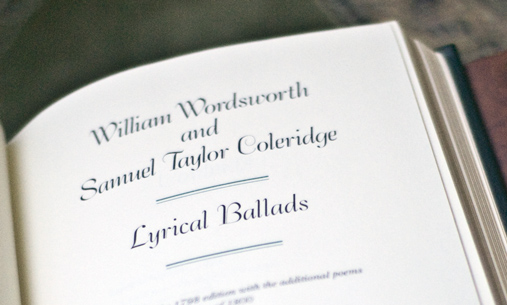
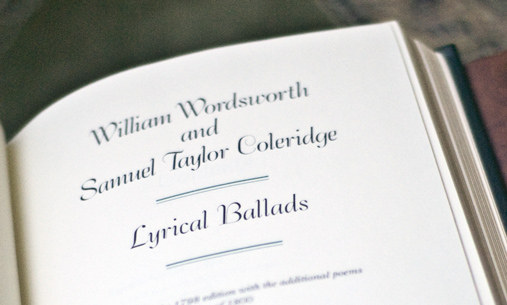
The publication of Lyrical Ballads in 1798, a collaborative effort by William Wordsworth and Samuel Taylor Coleridge, stands as an indisputable landmark in English literary history. It is widely acknowledged as the symbolic beginning of the Romantic period, ushering in a profound shift in poetic sensibilities, subject matter, and language. This collection was not merely a new anthology of verse; it was a radical manifesto, challenging the established norms of neoclassical poetry and advocating for a return to authenticity, emotion, and the profound beauty of ordinary life and nature.
Contents
Marks Beginning of Romantic Period
Before Lyrical Ballads, English poetry was largely dominated by the tenets of Neoclassicism, characterized by an emphasis on reason, order, decorum, classical allusions, and a highly formal, often artificial, poetic diction. Poets like Alexander Pope and John Dryden exemplified this era, producing works that were intellectually rigorous but often emotionally restrained and distant from the experiences of common people. The Lyrical Ballads, however, consciously broke away from these conventions. Its experimental nature, explicitly stated in the “Advertisement” to the first edition and elaborated upon in Wordsworth’s “Preface” to the second (1800) edition, declared a new artistic philosophy.
This shift was not merely stylistic; it represented a fundamental change in worldview. The Enlightenment’s focus on universal reason began to give way to an appreciation for individual experience, emotion, imagination, and the sublime in nature. The French Revolution, though complex in its impact, also contributed to a climate of radical thought and a questioning of established hierarchies, which resonated with the democratic impulses underlying Romanticism. Lyrical Ballads captured this nascent spirit, marking a decisive break from the 18th century and laying the groundwork for the ensuing decades of Romantic literary production.
Aims and Objectives
The primary aims and objectives of Lyrical Ballads, as articulated by Wordsworth and Coleridge, were nothing short of revolutionary. They sought to:
- Choose incidents and situations from common life: This was a direct repudiation of the neoclassical preference for elevated, heroic, or classical subjects. Wordsworth believed that the “essential passions of the heart” could be found more genuinely in “humble and rustic life,” where they were less restrained and expressed in a “plainer and more emphatic language.”
- Relate or describe them throughout, as far as was possible, in a selection of language really used by men: This was perhaps the most audacious objective, aiming to dismantle the artificiality of “poetic diction” that had become prevalent. They advocated for a language that was accessible, natural, and reflective of everyday speech, believing that true poetry should not require a specialized vocabulary or ornate phrasing.
- Throw over them a certain colouring of imagination, whereby ordinary things should be presented to the mind in an unusual aspect: While championing the ordinary, Wordsworth did not intend for poetry to be mere prose. The poet’s imagination was crucial in illuminating the inherent wonder and significance in seemingly mundane experiences, awakening the reader from the “lethargy of custom.”
- Trace the primary laws of our nature: The poems aimed to delve into the universal aspects of human nature, exploring fundamental emotions and psychological states that transcend social distinctions.
- Appeal to the primary affections of our nature: They desired to evoke genuine human feeling and empathy in the reader, fostering a deeper connection with the characters and situations presented.
- Contribute to a moral and spiritual awakening: Wordsworth believed that by reconnecting readers with nature and the authenticity of human emotion, poetry could lead to moral edification and a more profound understanding of life.
Coleridge’s contributions, particularly “The Rime of the Ancient Mariner,” complemented Wordsworth’s focus on the ordinary by exploring the supernatural and the psychological, demonstrating a different facet of the Romantic imagination’s power to render the unfamiliar plausible and emotionally resonant.
Significance of Authorship
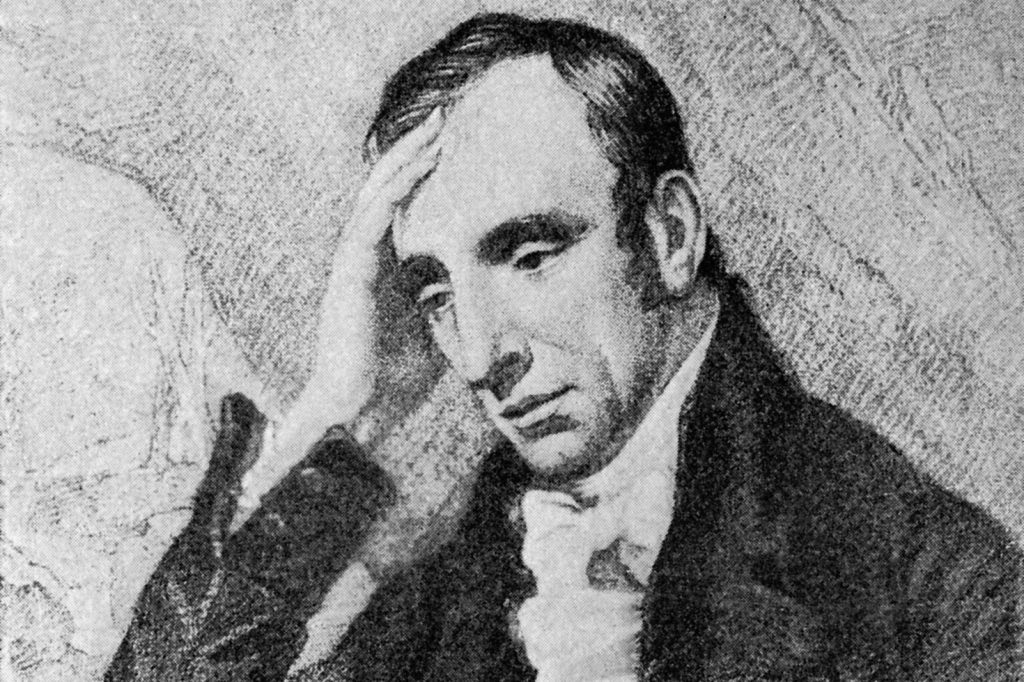
The authorship of Lyrical Ballads is significant on multiple levels. Firstly, it represents a collaboration between two burgeoning poetic geniuses. While Wordsworth penned the majority of the poems and the foundational “Preface,” Coleridge’s unique contributions, especially “The Rime of the Ancient Mariner,” brought a distinct supernatural and psychological dimension to the collection. This collaborative spirit, born from intense intellectual exchange and shared ideals, amplified the revolutionary impact of the work.
Secondly, the “Preface” is a powerful articulation of a new conception of the poet’s role. Wordsworth envisioned the poet not as a distant, intellectual elite, but as “a man speaking to men,” endowed with heightened sensitivity, imagination, and the ability to perceive and communicate universal truths embedded in ordinary life. This emphasis on the poet’s inner experience and emotional depth became a hallmark of Romantic authorship. The poet became a seer, a prophet, capable of revealing the profound in the commonplace. This was a radical departure from the neoclassical emphasis on the poet as a craftsman, adhering to established rules and conventions.
Furthermore, the very act of publishing such a collection, with its defiant rejection of prevailing tastes, solidified Wordsworth and Coleridge as pioneers of a new literary movement. Their willingness to experiment and articulate a new aesthetic provided a clear direction for subsequent generations of Romantic writers.
Significance of Readership
The Lyrical Ballads also fundamentally altered the relationship between poetry and its readership. Neoclassical poetry often appealed to an educated, aristocratic elite, familiar with classical allusions and sophisticated rhetorical devices. Wordsworth and Coleridge, however, deliberately sought to broaden the appeal of poetry, making it accessible to a wider audience. Their choice of “the language really used by men” was a direct attempt to democratize poetry, to allow common people to connect with and understand the verse without needing specialized literary knowledge.
Wordsworth’s “Preface” implicitly addresses the anticipated resistance from readers accustomed to the “gaudiness and inane phraseology of many modern writers.” He implored readers to approach the poems with an open mind, to judge them by their ability to “throw over them a certain colouring of imagination” and to portray “a natural delineation of human passions.” This was a call for a more emotive and empathetic engagement from the reader, rather than a purely intellectual appreciation. The success of Lyrical Ballads, despite initial mixed reviews, gradually cultivated a readership more attuned to the nuances of personal feeling, natural observation, and the profound significance of everyday experience. It encouraged readers to find poetry not just in grand narratives, but in the quiet contemplation of nature and the lives of humble individuals.
Mundane Theme
One of the most defining characteristics of Lyrical Ballads is its embrace of the mundane as a legitimate and profound subject for poetry. This was a direct challenge to the neoclassical tradition, which often favored elevated, heroic, or classical themes. Wordsworth explicitly stated his intention to choose “incidents and situations from common life.” This meant moving away from epic battles and mythological figures to focus on the lives of shepherds, rural laborers, children, and solitary wanderers.
Poems like “The Idiot Boy,” “Simon Lee, the Old Huntsman,” “The Thorn,” and “We Are Seven” exemplify this commitment to the mundane. These poems depict ordinary people grappling with simple joys, sorrows, and the rhythms of everyday existence. Wordsworth believed that within these seemingly unremarkable lives lay the universal truths of human nature and the most powerful emotions. He sought to reveal the extraordinary within the ordinary, demonstrating that profundity was not limited to grand narratives but could be found in the quiet dignity of rural life and the simple interactions between individuals. This emphasis on the commonplace was revolutionary, broadening the scope of poetic subject matter and making poetry relevant to a wider segment of society.
Reaction Against Neoclassical
The Lyrical Ballads represents a forceful and deliberate reaction against the prevailing neoclassical aesthetic. The 18th century, often termed the Age of Reason or the Augustan Age, prioritized:
- Reason and Intellect: Poetry was seen as a product of careful thought and adherence to established rules, emphasizing wit and logic.
- Order and Harmony: Strict metrical patterns, formal structures, and a sense of balanced proportion were highly valued.
- Classical Allusion and Imitation: Poets frequently drew inspiration from ancient Greek and Roman literature, employing mythological figures and historical events.
- Didacticism and Morality: Poetry often aimed to instruct and reinforce societal values.
- Poetic Diction: A highly formalized and artificial language was employed, distinct from everyday speech, often characterized by personification of abstract qualities, periphrasis, and Latinate vocabulary.
Lyrical Ballads directly subverted each of these tenets. Wordsworth and Coleridge championed emotion and imagination over strict reason, advocating for poetry as a “spontaneous overflow of powerful feelings.” They rejected rigid poetic forms in favor of more flexible and natural rhythms, closer to spoken language. Instead of classical allusions, they embraced native landscapes, folklore, and the common man. Their aim was not primarily didactic in the traditional sense, but to awaken sensibility and foster empathy. Most significantly, as discussed in the diction section, they launched a direct assault on the concept of poetic diction, arguing for the purity and power of ordinary language. The Lyrical Ballads was, in essence, a declaration of independence from the rules and artificiality of the preceding era, paving the way for a more organic, emotional, and individualistic form of poetic expression.
Inclination Towards Nature
A defining characteristic of Lyrical Ballads, and indeed of the Romantic movement it inaugurated, is its profound inclination towards nature. Nature in these poems is not merely a picturesque backdrop but a dynamic, sentient entity that profoundly influences human experience and serves as a source of spiritual insight, solace, and moral guidance.
Wordsworth, in particular, saw nature as a living teacher and a repository of truth. He believed that in “humble and rustic life,” human passions were “incorporated with the beautiful and permanent forms of nature.” Poems like “Lines Composed a Few Miles Above Tintern Abbey” exemplify this deep connection. The speaker revisits a beloved natural spot and reflects on how the “beauteous forms” of nature have shaped his inner being, offering comfort and wisdom. Nature is depicted as a benevolent force that can heal the spirit, restore equilibrium, and foster a sense of unity with the universe.
This inclination was a deliberate contrast to the neoclassical tendency to view nature through a more ordered, rational, and often manicured lens. For the Romantics, nature was wild, untamed, and sublime, capable of evoking awe and wonder. It was a place where one could escape the corrupting influences of society and reconnect with one’s authentic self. The natural world in Lyrical Ballads becomes a mirror for human emotions, a catalyst for memory and reflection, and ultimately, a path to understanding the deeper mysteries of existence.
Wordsworth’s Opinion About Poetry
Wordsworth’s most explicit and influential articulation of his poetic philosophy is found in the “Preface” to the 1800 edition of Lyrical Ballads. His opinions about poetry can be summarized by several key ideas:
- Poetry as the “Spontaneous Overflow of Powerful Feelings”: This is arguably Wordsworth’s most famous definition. He believed that genuine poetry originates from intense emotion, not from intellectual contrivance or adherence to rigid rules. However, he clarified that this “spontaneous overflow” is then “recollected in tranquility.” This implies a process where emotion is first experienced intensely, then contemplated and refined in a calm state, allowing for thoughtful expression.
- The Poet as a “Man Speaking to Men”: Wordsworth rejected the idea of the poet as a distant, elevated figure. Instead, he saw the poet as essentially human, sharing common sensibilities, but possessing a heightened capacity for observation, imagination, and empathy. The poet’s language, therefore, should be accessible and intelligible to all.
- Purpose of Poetry: To give “immediate pleasure” and “moral improvement”: While pleasure was an immediate aim, Wordsworth also believed that poetry had a higher moral purpose. By engaging the reader’s emotions and imagination, poetry could purify and elevate the human spirit, fostering sympathy, understanding, and a greater appreciation for truth.
- Subject Matter from Common Life: As discussed, Wordsworth championed the use of “incidents and situations from common life,” arguing that these offered the richest ground for exploring fundamental human passions.
- Rejection of Poetic Diction: He vehemently opposed the artificial and elaborate language that had become characteristic of much 18th-century poetry. He argued for a “selection of language really used by men,” believing that true poetic power lay in simplicity and sincerity, not in ornate embellishment.
- Emphasis on Imagination: While emotion was the source, imagination was the faculty that transformed raw feeling into art. It was the “coloring” that the poet’s mind cast over ordinary subjects, revealing their inherent wonder and significance.
Wordsworth’s opinions redefined the very nature and purpose of poetry, shifting the focus from external rules and classical models to internal experience, genuine emotion, and the profound beauty of the everyday.
Diction
The issue of diction is central to the revolutionary character of Lyrical Ballads. Wordsworth, in his “Preface,” launched a direct and scathing critique of the “gaudiness and inane phraseology” of much 18th-century poetry, which he famously termed “poetic diction.” This established diction was characterized by:
- Artificiality: Use of elevated, archaic, or Latinate words that were not part of everyday speech.
- Periphrasis: Using roundabout or elaborate phrases instead of simple, direct terms (e.g., “finny tribe” for fish, “feathered throng” for birds).
- Personification of Abstracts: Giving human qualities to abstract concepts (e.g., “Pale Melancholy”).
- Inversion: Rearranging word order for metrical or stylistic effect, often leading to unnatural syntax.
- Overuse of Classical Allusions: Requiring specialized knowledge from the reader.
Wordsworth argued that this “poetic diction” created a barrier between the poet and the common reader, obscuring genuine emotion and truth. His radical proposition was to adopt a “selection of language really used by men,” particularly those in “humble and rustic life.” He believed that such language, being simpler and more direct, was inherently more expressive of natural human passions and therefore more suitable for poetry.
While he didn’t advocate for entirely prosaic language, he aimed for a diction that was natural, clear, and unadorned, relying on the inherent power of the words themselves and the emotional resonance they conveyed. This meant using concrete nouns and verbs, avoiding excessive embellishment, and embracing the rhythms of spoken English.
Examples from the Lyrical Ballads clearly demonstrate this shift. Poems like “We Are Seven” and “The Idiot Boy” employ a remarkably simple and direct vocabulary, aiming for authenticity over artificiality. This was a deliberate act of linguistic democratization, designed to make poetry more accessible and emotionally resonant for a broader audience, and to strip away the “false refinements” that Wordsworth believed had corrupted the poetic art.
Conclusion
Lyrical Ballads is far more than a collection of poems; it is a seminal text that fundamentally reshaped the course of English literature. Its publication in 1798 marked the official inauguration of the Romantic period, initiating a profound paradigm shift from the rationalistic and formal strictures of Neoclassicism to a fervent embrace of emotion, imagination, and the individual spirit.
The collaborative vision of Wordsworth and Coleridge, articulated with such clarity in the “Preface,” redefined the aims and objectives of poetry. They championed the mundane as a source of profound truth, moving poetry from the drawing rooms of the elite to the cottages of the common folk. This democratic impulse extended to their revolutionary approach to authorship, portraying the poet not as a detached craftsman but as a “man speaking to men,” uniquely attuned to the universal rhythms of human experience and the wisdom of nature. Concomitantly, the significance of readership expanded, as the collection aimed to resonate with a wider audience through its accessible language and relatable themes, fostering a new, empathetic engagement with poetic art.
The collection’s unwavering inclination towards nature, presenting it as a vital, sentient force that nurtures and inspires, became a cornerstone of Romantic thought. Wordsworth’s explicit opinions on poetry, emphasizing its spontaneous, emotional origin and its capacity for moral elevation, provided a theoretical framework for the burgeoning movement. Finally, the radical departure from conventional poetic diction, advocating for the “language really used by men,” stripped away the artificiality of the past and paved the way for a more authentic and powerful poetic voice.
In essence, Lyrical Ballads was a daring experiment that succeeded in liberating poetry from its 18th-century constraints. It celebrated the innate dignity of ordinary life, the transformative power of nature, and the boundless potential of the human imagination. Its enduring legacy lies not only in the beauty of its individual poems but in its profound and lasting influence on the very definition and purpose of poetry, laying the groundwork for the rich and diverse landscape of Romantic literature that followed.
Aman Pal
Literatureman