
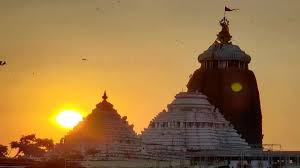
“Dawn at Puri” by Jayanta Mahapatra is one of the most celebrated and anthologized poems in modern Indian English literature. First published in his acclaimed 1976 collection A Rain of Rites, the poem offers a deeply observant, somber, and unromanticized gaze at Puri—a coastal city in Odisha, India, that stands as one of the holiest destinations in Hinduism, famed for the historic Jagannath Temple and the sacred Swargadwara (the gateway to heaven) cremation grounds.
Traditionally, a dawn in a holy city is romanticized in literature as a time of divine awakening, filled with the chanting of hymns, the ringing of temple bells, and a sense of spiritual rejuvenation. Mahapatra, however, radically subverts this trope. Utilizing a stark, modernist poetic sensibility, he strips away the layers of religious mysticism to expose the raw, underlying human realities: systemic poverty, the isolation of abandoned women, physical decay, and the inescapable presence of mortality. The poem acts as a cultural and psychological critique of blind faith, exploring how ancient myths sustain suffering individuals by promising them liberation in death, rather than relief in life. Through a transition from detached social observation to a deeply painful personal confession involving his own mother, Mahapatra creates a haunting, deeply empathetic meditation on the landscape of faith and human vulnerability.
Line-by-Line Analysis
Line 1: Endless crow noises.
Mahapatra begins not with temple bells or hymns, but with the harsh, jarring sound of crows. The word “endless” suggests an overwhelming, inescapable presence that suffocates the morning. In Indian culture, crows are traditional scavengers and are deeply tied to funeral rites and the spirits of the dead (pitrus). This immediately casts a bleak, ominous shadow over the dawn.
Lines 2–3: A skull on the holy sands / tilts its empty country towards hunger.
The “holy sands” refer to the sacred beach of Puri where funeral pyres burn constantly. Finding a discarded skull here shatters any illusion of divine purity. The phrase “empty country” functions beautifully on two levels: it refers to the hollow, vacant eye sockets of the skull looking upward, but it also serves as a scathing metonymy for India itself, pointing directly to the stark, historic realities of starvation and poverty (“hunger”) plaguing the nation.
Lines 4–6: White-clad widowed women / past the centers of their lives / are waiting to enter the Great Temple.
The focus shifts to the pilgrims. These are elderly widows, dressed in traditional white mourning weeds. In conservative societies, widows were often marginalized, stripped of status, and abandoned. “Past the centers of their lives” indicates they are in the twilight of their existence. They gather at the dawn of day, which ironically contrasts with the dusk of their lives, waiting for the gates of the Jagannath Temple (“the Great Temple”) to open, seeking a desperate solace.
Lines 7–9: Their eyes are expressionless pastly / like those of lizards on a wall, / guided by a legend of light.
The widows have endured so much systemic neglect and spiritual waiting that their eyes have lost all vitality (“expressionless”). The poet uses a stark simile, comparing them to lizards on a wall—still, cold, and frozen in time. Yet, they are driven forward by a “legend of light”—a fragile, centuries-old religious myth that dying in Puri or entering this temple will grant them moksha (enlightenment and salvation) from their earthly suffering.
Lines 10–11: And a single, derived wish / as the intrinsic peace of a vibrant morning.
The “single, derived wish” of these women is simply the peace of death or ultimate liberation. Ironically, the physical morning is described as “vibrant”—nature is waking up, the sun is rising—but for these widows, the only “intrinsic peace” they can hope for is a quiet end to their struggles. Their internal world is completely detached from the bright, living morning.
Lines 12–14: Ruined paschal landscapes ruinously track / the bleary eye to a sudden funeral pyre / after another.
The word “paschal” traditionally relates to the Christian Passover or Easter, evoking sacrifice and renewal. Here, Mahapatra uses it secularly to denote ritualistic sacrifice and death. As the morning mist clears, the “bleary eye” of the observer is forced to track the grim reality of consecutive funeral pyres burning on the beach. Death is industrial and continuous here; one pyre follows another without pause.
Lines 15–16: Quietly inside the mass of crouching women / my aged mother is there,
The poem suddenly takes a dramatic, autobiographical turn. It shifts from a detached sociological observation to a painful, intimate confession. The poet identifies his own aging mother sitting quietly among the collective, indistinguishable “mass” of crouching widows. She is no longer just an observer’s subject; she is actively part of this tragic cycle of devotion.
Lines 17–19: she wishes to be cremated here, / twixt earth and sky, twisting her uncertain life, / her skin hanging loose like a leather pouch.
The poet’s mother harbors the exact same traditional desire: to be cremated on these holy sands to ensure salvation. Her fragile life is caught “twixt” (between) the physical earth and the spiritual sky, balancing precariously at the edge of existence. Mahapatra uses a raw, visceral, and unsparing image to describe her physical decay—her skin is dry, loose, and lifeless, compared to an old leather pouch.
Lines 20–21: her last wish to be that smoke / which her aching eyes can see.
The poem closes with her ultimate desire: she wants to dissolve and become the very smoke rising from the funeral pyres she is currently staring at. Her “aching eyes” look at the reality of death not with terror, but with a weary, desperate longing. She wishes to become nothingness, completing her spiritual journey and escaping her physical suffering.
Literary Devices & Figures of Speech
- Metaphor:
- “tilts its empty country towards hunger” – The hollow, starving skull stands as a metaphor for the broader economic and spiritual poverty of the country.
- “legend of light” – A metaphor for ancient religious myths, scriptures, and the elusive promise of salvation.
- Simile:
- “like those of lizards on a wall” – Captures the blank, unblinking, and desensitized state of the widows who have been reduced to mere survival.
- “skin hanging loose like a leather pouch” – A visceral tactile simile emphasizing the raw, unglamorized reality of old age and physical degeneration.
- Imagery: The poem relies heavily on grim auditory and visual imagery (“endless crow noises”, “white-clad widowed women”, “sudden funeral pyre”, “smoke”), creating an atmospheric, bleak canvas of Puri.
- Alliteration: The repetition of consonant sounds provides a rhythmic, melancholic weight to the lines:
- White-clad widowed women
- legend of light
- ruined paschal landscapes ruinously track
- Irony: The overarching device is situational irony. “Dawn” traditionally signifies hope, birth, and new beginnings. Here, dawn brings forth symbols of death, decay, old age, and the literal smoke of cremation pyres.
Conclusion
“Dawn at Puri” is a masterclass in the deconstruction of religious romanticism. Jayanta Mahapatra brilliantly contrasts the cyclical, vibrant renewal of nature (the dawn) with the linear decay of human existence. By masterfully weaving his own mother’s intimate plight into the broader, collective suffering of the temple widows, the poem transcends simple social commentary. It becomes a deeply empathetic, haunting, and timeless meditation on the human condition—revealing how faith serves as both a comfort and an opiate for those caught in the devastating grip of poverty and aging, ultimately viewing death not as a tragedy, but as a desperately sought release.
Aman Pal
Literatureman